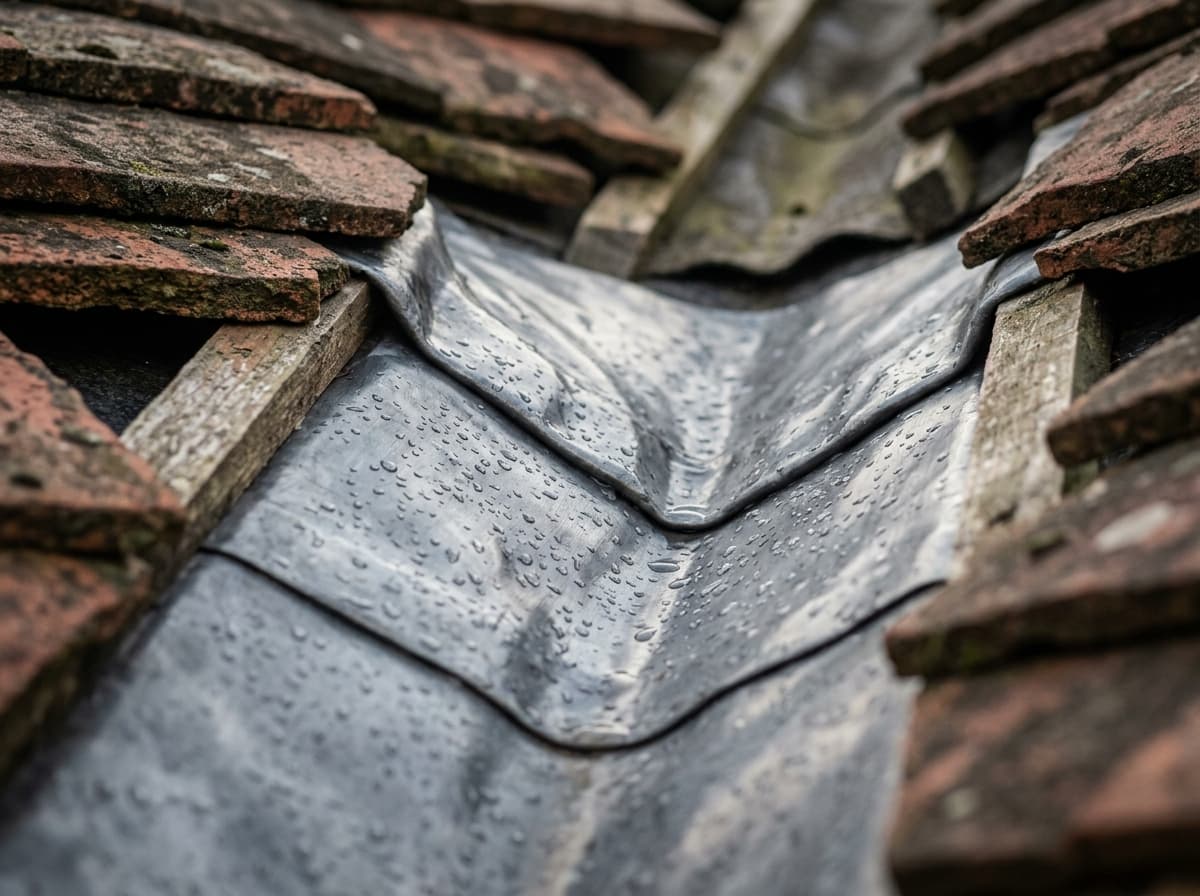
Leadwork & Flashing
Chimney flashing, valley leadwork and abutment detailing — the junctions where a roof most commonly leaks.
About Our Leadwork & Flashing Service
Flashing and leadwork cover every junction where a roof covering meets something that isn't more roof — a chimney stack, a wall abutment, a valley where two roof slopes meet, or a dormer window. These junctions can't be made watertight by tiles or slates alone, so lead (specified by code/thickness for the span and exposure involved) is dressed and formed around them: step flashing and cover flashing at chimneys and abutments, soakers woven between tiles at junctions, and valley leadwork channelling water from two roof slopes into one route. Lead is chosen because it can be dressed by hand to follow an irregular junction and will move with the building over time without cracking the way a rigid material would — but that same flexibility means it can also lift, split or corrode over the years, particularly on coastal properties where salt-laden air accelerates the process, which is why flashing failure is one of the most common sources of a leak that repeated tile repairs never actually fix.
Get a Free Quote Today
Book a Free Roof SurveyBenefits of Our Leadwork & Flashing Service
- ✓Lead specified by code/thickness to suit the span and exposure of each junction
- ✓Hand-dressed detailing at chimneys, valleys, abutments and dormers — the junctions tiles alone can't seal
- ✓Addresses the actual source of leaks that look like a tile problem but aren't
Leadwork & Flashing — Frequently Asked Questions
Flashing is formed, hand-dressed lead rather than a factory-made covering, so it's the point most exposed to movement, weathering and, on coastal properties, salt-laden air — all of which accelerate corrosion and lifting over time compared with the tiles or slates around it.
Leaks near a chimney, a wall junction, or where two roof slopes meet in a valley are often a flashing issue rather than a covering issue, even if the visible damage looks tile-related. A proper inspection traces the water back to its actual entry point rather than assuming.
It depends on the location and height of the junction being worked on — some ground-floor or single-storey flashing can be reached without it, while chimney and higher-level leadwork often needs safe scaffold access. We'll confirm what your specific job needs during a survey.
Leadwork & Flashing — Areas We Cover
Chandler's Ford
Hampshire
Also covers nearby:
Ready to Start Your Leadwork & Flashing?
Book your free no-obligation survey today.